UX / UI Design
OSINT Profiler
Built a simplified, mobile-friendly web application for person-of-interest investigations. The tool turns complex, graph-based threat intelligence into a fast, identifier-driven search interface for non-technical field operators.
Project Duration :
2023 - Hackathon & MVP Cycle
Client :
Maltego
Industry :
Tech, Cybersecurity
Role :
UX/UI Designer
Team size :
Cross-functional (Designers, Devs, SMEs)
Tools :
Figma

Problem :
Advanced cyber intelligence tools have a steep learning curve. Maltego’s desktop client is powerful, but its dense node-graph interface creates intense friction for non-technical field investigators. They need quick, actionable data without advanced link-analysis overhead.
Additionally, standard investigative tools lack fluid cross-device scalability. Teams lack a consistent way to securely log in and triage live leads whether on a phone, an iPad, or a desktop at headquarters.

Solution :
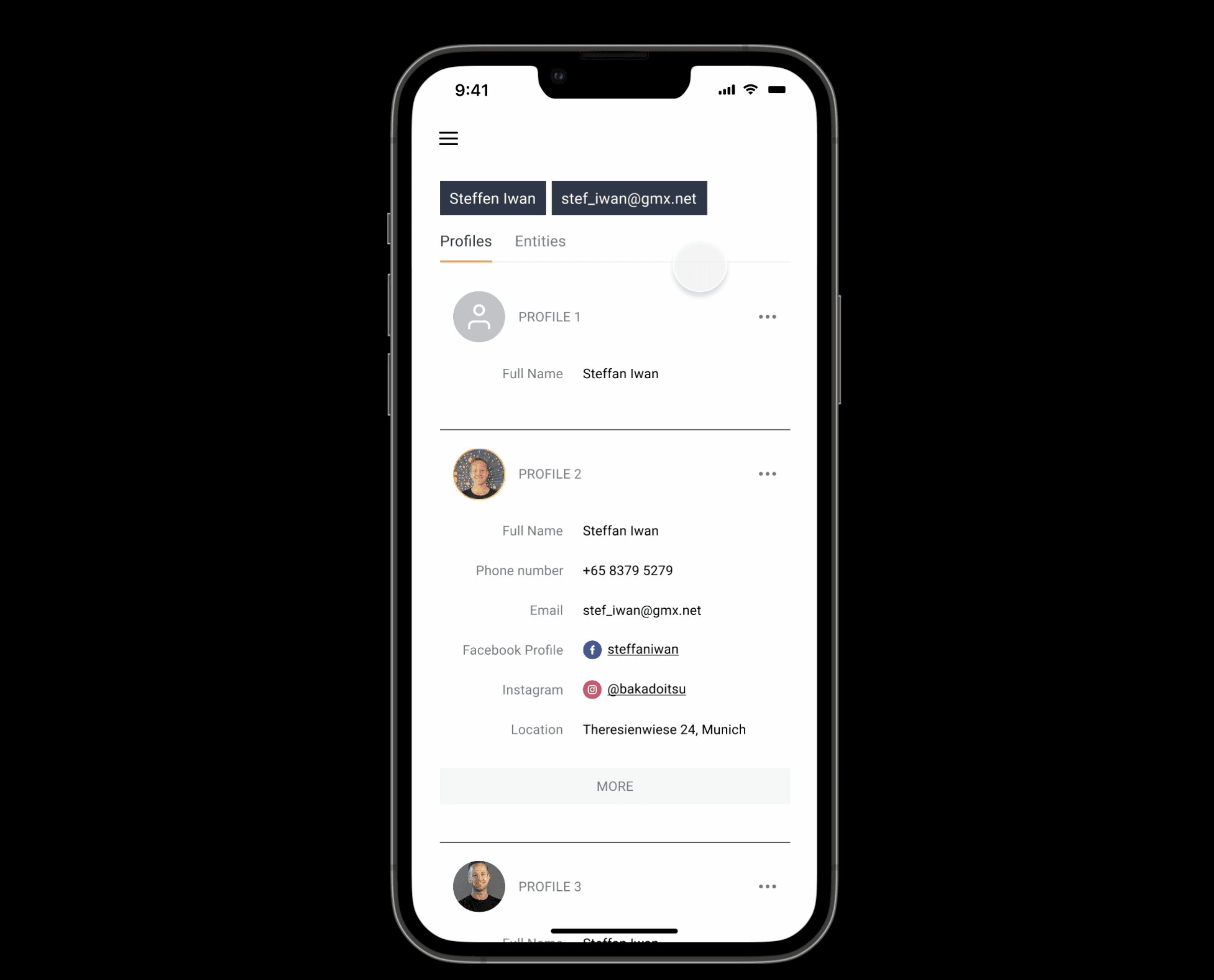
Designed a direct search experience centered purely around core personal identifiers like names, emails, and aliases. The clean UI strips away dense data noise. It translates fragmented database streams into two highly scannable views: Profiles (complete digital personas with avatars and locations) and Entities (individual identifiers sorted by category).
To bridge the gap between field collection and expert analysis, I designed an intuitive bookmarking workflow and a clipboard dashboard. Investigators can isolate critical leads, view live location maps, and instantly generate a standardized "Save as PDF" report from any device.
Open Figma Prototype
Challenge :
The core obstacle was technical data translation and managing non-deterministic linkages. Threat intelligence pulls massive amounts of raw, unverified text from fragmented breach logs and social APIs. The UI challenge was designing a layout engine that can display weak, probabilistic data matches without tricking the investigator into treating a guess as an absolute fact.
Designing in a high-velocity hackathon setting meant rapidly shipping visual clarity for these complex states. I paired directly with frontend engineers in real-time design-to-code loops, developing intuitive layout lineages, responsive data counters, and a secure local browser storage structure that protected user privacy.
Summary :
We took a complex intelligence tool and made it fast and actionable for field teams. By removing the data bloat and focusing on a responsive UI, the final app lets any officer turn a simple search input into a court-ready PDF report in seconds.
No specialized training needed. Officers just log in, drop in a lead on whatever device they have, filter the results, and immediately secure the data they need.

More Projects





UX / UI Design
OSINT Profiler
Built a simplified, mobile-friendly web application for person-of-interest investigations. The tool turns complex, graph-based threat intelligence into a fast, identifier-driven search interface for non-technical field operators.
Project Duration :
2023 - Hackathon & MVP Cycle
Client :
Maltego
Industry :
Tech, Cybersecurity
Role :
UX/UI Designer
Team size :
Cross-functional (Designers, Devs, SMEs)
Tools :
Figma
Problem :
Advanced cyber intelligence tools have a steep learning curve. Maltego’s desktop client is powerful, but its dense node-graph interface creates intense friction for non-technical field investigators. They need quick, actionable data without advanced link-analysis overhead.
Additionally, standard investigative tools lack fluid cross-device scalability. Teams lack a consistent way to securely log in and triage live leads whether on a phone, an iPad, or a desktop at headquarters.
Solution :
Designed a direct search experience centered purely around core personal identifiers like names, emails, and aliases. The clean UI strips away dense data noise. It translates fragmented database streams into two highly scannable views: Profiles (complete digital personas with avatars and locations) and Entities (individual identifiers sorted by category).
To bridge the gap between field collection and expert analysis, I designed an intuitive bookmarking workflow and a clipboard dashboard. Investigators can isolate critical leads, view live location maps, and instantly generate a standardized "Save as PDF" report from any device.
Open Figma Prototype
Challenge :
The core obstacle was technical data translation and managing non-deterministic linkages. Threat intelligence pulls massive amounts of raw, unverified text from fragmented breach logs and social APIs. The UI challenge was designing a layout engine that can display weak, probabilistic data matches without tricking the investigator into treating a guess as an absolute fact.
Designing in a high-velocity hackathon setting meant rapidly shipping visual clarity for these complex states. I paired directly with frontend engineers in real-time design-to-code loops, developing intuitive layout lineages, responsive data counters, and a secure local browser storage structure that protected user privacy.
Summary :
We took a complex intelligence tool and made it fast and actionable for field teams. By removing the data bloat and focusing on a responsive UI, the final app lets any officer turn a simple search input into a court-ready PDF report in seconds.
No specialized training needed. Officers just log in, drop in a lead on whatever device they have, filter the results, and immediately secure the data they need.
More Projects
UX / UI Design
OSINT Profiler
Built a simplified, mobile-friendly web application for person-of-interest investigations. The tool turns complex, graph-based threat intelligence into a fast, identifier-driven search interface for non-technical field operators.
Project Duration :
2023 - Hackathon & MVP Cycle
Client :
Maltego
Industry :
Tech, Cybersecurity
Role :
UX/UI Designer
Team size :
Cross-functional (Designers, Devs, SMEs)
Tools :
Figma
Problem :
Advanced cyber intelligence tools have a steep learning curve. Maltego’s desktop client is powerful, but its dense node-graph interface creates intense friction for non-technical field investigators. They need quick, actionable data without advanced link-analysis overhead.
Additionally, standard investigative tools lack fluid cross-device scalability. Teams lack a consistent way to securely log in and triage live leads whether on a phone, an iPad, or a desktop at headquarters.
Solution :
Designed a direct search experience centered purely around core personal identifiers like names, emails, and aliases. The clean UI strips away dense data noise. It translates fragmented database streams into two highly scannable views: Profiles (complete digital personas with avatars and locations) and Entities (individual identifiers sorted by category).
To bridge the gap between field collection and expert analysis, I designed an intuitive bookmarking workflow and a clipboard dashboard. Investigators can isolate critical leads, view live location maps, and instantly generate a standardized "Save as PDF" report from any device.
Open Figma Prototype
Challenge :
The core obstacle was technical data translation and managing non-deterministic linkages. Threat intelligence pulls massive amounts of raw, unverified text from fragmented breach logs and social APIs. The UI challenge was designing a layout engine that can display weak, probabilistic data matches without tricking the investigator into treating a guess as an absolute fact.
Designing in a high-velocity hackathon setting meant rapidly shipping visual clarity for these complex states. I paired directly with frontend engineers in real-time design-to-code loops, developing intuitive layout lineages, responsive data counters, and a secure local browser storage structure that protected user privacy.
Summary :
We took a complex intelligence tool and made it fast and actionable for field teams. By removing the data bloat and focusing on a responsive UI, the final app lets any officer turn a simple search input into a court-ready PDF report in seconds.
No specialized training needed. Officers just log in, drop in a lead on whatever device they have, filter the results, and immediately secure the data they need.